The Tomb of Hattori Ayumu
|
| |||||||||
Overview
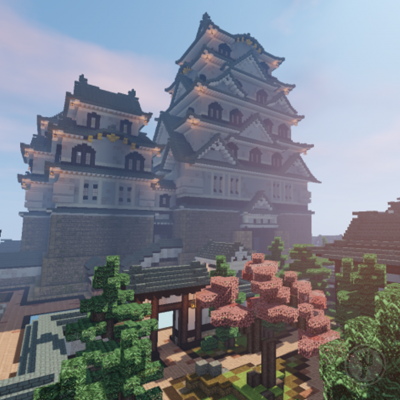
Discovered in 1846 beneath the Himeji Castle in the Harima province (now the Hyogo prefecture), the Tomb of Hattori Ayumu is said to have been taken straight out of a fairytale. From the intricate detailing along her casket to the pristine condition the room was found in, Ayumu was thought to have been someone who held a high standing within the governing clan. However, as archaeological technology and knowledge advanced, a closer inspection of the various scrolls and pictures found in her tomb and along her casket would show a slightly different story.
History
The discovery of the tomb by British archaeologist Charles Wright came as a shock to the entire world, especially to the shogunate who occupied the Himeji Castle at the time and had explored every crevice of the grounds. Originally, Charles had been invited to the castle to inspect tablets found in another part of the Harima province. During his stay, he had been granted permission to explore the castle. When alone, Charles would often pull out his wand to cast Revelius. He would do this in various spots around the castle with the hope that something would open itself to him. Eventually, the sound of stone and plaster sliding to reveal a passageway would echo through the empty hallway. Charles was led down a damp walkway that would eventually open into a nicely lit room.
The room was circular, with posts surrounding the centre of the room. The room matched the design of the rest of the castle’s interior. There was no scent and the temperature seemed to be relatively cool. The sound of the wall sliding back into place interrupted the silence that seemed to engulf the room. Charles walked around the perimeter, inspecting the writing that seemed to be lightly engraved into some of the walls. It wasn’t until he thought he heard the door reopening that he turned around and noticed the casket in the centre of the room. Charles tried to lift the lid of the coffin, but it had been enchanted to stay shut. Along the trim, the name Hattori Ayumu was engraved.
Charles kept the knowledge of Hattori Ayumu’s tomb to himself for days. Every night he would sneak down to the room, eager to study the scrolls and engravings he found inside. However, five days after Charles had discovered the secret tomb, a servant in the castle spotted him opening and closing the hidden door. Immediately, the servant ran to the shogun to inform him of what they had just seen. Charles was retrieved from the room, and a deal was made between the archaeologist and the shogun that the series of events behind the tomb’s discovery would be completely due to luck rather than magic. It was agreed that Charles would publish the story of Hattori Ayumu while the shogun informed the proper magical authorities in Japan of the discovery. The story of Hattori Ayumu is as follows:
| " |
A baby girl, born on the brightest day of the year, is said to have been smiled down upon by Amaterasu herself. From a young age, her village called her their dream. However, tragedy would strike the girl at a young age. In her 13th year of life, her village was raided and burned to the ground. By some miracle, the girl managed to escape, but not without scars. From screaming, heat exposure, and the inhalation of smoke and ashes, her vocal cords became permanently damaged. The young girl, who could no longer speak, ran as far as she could from her village and attackers. She ran until she could feel every beat of her heart in her fingertips. She collapsed at the gates to a neighbouring village, trying to call out for help despite no sound leaving her mouth. The young girl would lay unnoticed on the ground for two days until a merchant rode past on his cart. The man lifted her into his cart and continued his journey to the Himeji Castle. When the young girl had awoken, the merchant tried to ask for her name. However, she could not say or write it. Sighing, the merchant gave her the name Ayumu because of how long she was unconscious and dreaming. Upon arriving at the castle, he would also give her his last name to support the claim that they are father and daughter. The newly renamed Hattori Ayumu was in awe of the towering structures that made up the castle. She had never seen buildings so large. While at the castle, the merchant would occupy her by requesting drawings of various fashion and architecture Ayumu would see. She would spend hours sketching whatever was requested of her, pleased to be able to do something helpful. Her constant drawing would eventually catch the eye of the shogun’s wife. The seishitsu began to seek out Ayumu, requesting that the young girl draw pictures of the castle’s scenery for her. When it came time for the merchant to leave, the seishitsu requested that Ayumu be left at the castle under her care. Having grown fond of the girl, the merchant was hesitant at first but eventually agreed after being paid handsomely for his sacrifice. From then on, Ayumu would spend most of her time with the shogun’s wife, drawing various landscapes or fashion trends she saw the castle officials wearing. Unfortunately, tragedy would strike Ayumu once again three years after she began living at Himeji Castle. The seishitsu—who was the shogun’s first wife—had suddenly become very ill. Her health rapidly declined until she passed away in the night. The castle mourned the loss of their kind-hearted seishitsu, and Ayumu mourned the loss of a second mother. However, the tragedy of this loss could not be grieved for long. Later that year, the shogun remarried to the eldest daughter of an allied province. The union would strengthen the two family’s ties. Much to the dismay of Ayumu, the new seishitsu was the complete opposite of the previous one. The shogun’s second wife quickly became jealous and threatened by the love and care shown to Ayumu by the shogun and his family. The next year, Hattori Ayumu would be found dead after having consumed a poisoned liquid. The shogun was distraught, immediately making plans to have her buried close to his first wife as a way to honour their bond. However, these plans would come to a sudden halt after the shogun announced he received instructions from Ame-no-Uzume—the goddess of dawn and the arts. He explained that the goddess had visited him in his dream and requested that Ayumu be given a tomb hidden within Himeji Castle. If the young girl was given this burial, the castle would be blessed. Construction of the tomb lasted a month, during which they filled the walls with engravings of Ayumu’s life and drawings done by her. The night she was placed in the coffin, a large ceremony was held to honour her life. However, once dawn had struck, the lid of her casket was sealed shut with magic, and the entrance to the tomb was closed off in a similar way. Gradually, the residents of Himeji Castle began to forget about Hattori Ayumu until she fully faded from memory and history. |
|
- Excerpt from the story of Hattori Ayumu |
Modern Day
Currently, the Tomb of Hattori Ayumu is preserved in its original location beneath the Himeji Castle. The Japanese ministry has placed strong wards around all possible entrances and exits to the tomb, aiming to protect it from anyone who isn’t approved to enter the room. On occasion, students from Mahounoshiro are permitted to enter the tomb for academic purposes.
Impact on Gameplay
Students from Mahounoshiro are permitted to enter Hattori Ayumu’s tomb on occasion. Players can visit Mahounoshiro at various events throughout the year, often during the Winter Waltz at the conclusion of each year.
Trivia
- You can learn about the tomb of Hattori Ayumu in Magical Archaeology classes hosted by the Academics team.
