Difference between revisions of "Elf Plague"
m |
(Added sections for May 2025 lore update) |
||
| Line 1: | Line 1: | ||
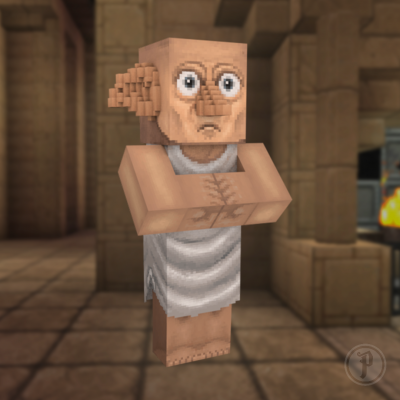
| − | {{ | + | {{Infobox |
| − | + | |image=Kira.PNG | |
| − | + | |header1=Medical Incident | |
| − | + | |data1=Elf Plague | |
| − | + | |header2=Involved Location(s) | |
| − | + | |data2=[[Merlin's Magical Hospital{{!}}Merlin’s Magical Hospital]], House Elf Placement Agency | |
| − | + | |header3=Lore Credit(s) | |
| − | + | |data3=xMye, myriadofanger | |
| − | + | }} | |
| − | |||
| − | |||
| − | |||
| − | |||
| − | |||
| − | |||
| − | [[Merlin's Magical Hospital{{!}}Merlin’s Magical Hospital]], House Elf Placement Agency | ||
| − | |||
| − | |||
| − | |||
| − | |||
| − | |||
== Overview == | == Overview == | ||
<p>In the 1830s, a rogue disease now known as the Elf Plague sent the magical community into a panicked frenzy. The origins of this disease are unclear, but people speculate that it could have occurred due to an Elf being bitten by a rabid rodent, such as a rat, mouse or even the fleas they carried; or un-sanitised living conditions and poor diets.</p><p>Once an Elf is infected, they become extremely unpredictable, unmanageable and stealthy. This means unsuspecting wizards and witches are at larger risk of being attacked. Attacks do not cause long-lasting health conditions but, once a magical individual is bitten or scratched, they will start developing an excruciating rash and blisters followed by hallucinations and paranoia. These symptoms can last anywhere from three to six months if untreated. If treated within forty-eight hours, the effects will slowly fade over two to three weeks.</p><p>Due to the way this plague is contracted, the disease has since embedded itself into the Elf species' DNA, causing it to lay dormant for years. Once awoken, it can rapidly spread, unleashing its true effects.</p> | <p>In the 1830s, a rogue disease now known as the Elf Plague sent the magical community into a panicked frenzy. The origins of this disease are unclear, but people speculate that it could have occurred due to an Elf being bitten by a rabid rodent, such as a rat, mouse or even the fleas they carried; or un-sanitised living conditions and poor diets.</p><p>Once an Elf is infected, they become extremely unpredictable, unmanageable and stealthy. This means unsuspecting wizards and witches are at larger risk of being attacked. Attacks do not cause long-lasting health conditions but, once a magical individual is bitten or scratched, they will start developing an excruciating rash and blisters followed by hallucinations and paranoia. These symptoms can last anywhere from three to six months if untreated. If treated within forty-eight hours, the effects will slowly fade over two to three weeks.</p><p>Due to the way this plague is contracted, the disease has since embedded itself into the Elf species' DNA, causing it to lay dormant for years. Once awoken, it can rapidly spread, unleashing its true effects.</p> | ||
| − | |||
| − | |||
== Symptoms == | == Symptoms == | ||
| Line 31: | Line 17: | ||
<p>'''Stage One '''– Stuffy nose, vomiting, dizziness, and a fever-like temperature. They also begin to develop hives all over their body, commonly mistaken for chickenpox.</p><p>'''Stage Two''' – Unpredictable and unmanageable behaviour alongside disorientation. Infected Elves also lose all sense of being, including where and who others are. This is followed by an increase in speed and irrational body movements. </p> | <p>'''Stage One '''– Stuffy nose, vomiting, dizziness, and a fever-like temperature. They also begin to develop hives all over their body, commonly mistaken for chickenpox.</p><p>'''Stage Two''' – Unpredictable and unmanageable behaviour alongside disorientation. Infected Elves also lose all sense of being, including where and who others are. This is followed by an increase in speed and irrational body movements. </p> | ||
| − | '''Stage Three''' – The last stage involves all of the following symptoms; however, they lastly develop uncontrollable rage, a vile odour and a taste for unsavoury “foods”. Infected Elves also start foaming at the mouth, lose the ability to form words and their appearance becomes similar to a goblin, but smaller in height. | + | '''Stage Three''' – The last stage involves all of the following symptoms; however, they lastly develop uncontrollable rage, a vile odour and a taste for unsavoury “foods”. Infected Elves also start foaming at the mouth, lose the ability to form words and their appearance becomes similar to a goblin, but smaller in height. |
| − | |||
== The Case of Tinesi == | == The Case of Tinesi == | ||
<p>The first documented case of this fast-growing disease was in Cameroon, Africa. Tinesi, a female Elf who lived and worked on a wheat grain farm for the wealthy Kengne family, suddenly came down with what was thought to be a common cold. This was later followed by what was thought to be chickenpox. However, her ever-growing symptoms proved to be more sinister. </p><p>Tinesi was known for being an extremely caring and kind Elf, always offering to help the Kengne’s children with their needs in her free time. She was also known to be hard-working, even taking on extra work around the farm. When she became unwell, it took a toll on the entire farm and the workload of the other Elves.</p><p>At first, Tinesi was showing symptoms linked to a common cold; however, once she began developing hives, those around her thought it was a simple case of chickenpox. This did not last for long, as she soon began externalising aggressive behaviour and unnatural body movements towards the Kengne’s children when they visited her, resulting in them being strictly prohibited from seeing her until she was well again. </p><p>Over the following month, Tinesi became unrecognisable, both behaviourally and in her appearance. Unfortunately, the Kengne family had no other choice but to hand her over to the [[Ministry of Magicians{{!}}Ministry of Magicians]] when she attacked one of their children. Fortunately, the child recovered in a couple of weeks with the help of homemade remedies. Tinesi was sent to doctors who specialised in tuberculosis, hoping that they would isolate her to figure out what would work best to help her. To some extent, this worked, but what eventually happened to Tinesi is a mystery. Unbeknownst to the Kengne family, the other Elves they housed had also contracted the disease, rapidly running the wheat farm to the ground. </p><p>As a result of these events, the outbreak of the Elf Plague had quickly spread to other continents of the world. The Ministry took all necessary procedures that they could think of to eradicate this disease. However, due to the lengths they had to go, this caused the Elf species to plummet in numbers. Approximately 70% of infected Elves unfortunately met their fate.</p> | <p>The first documented case of this fast-growing disease was in Cameroon, Africa. Tinesi, a female Elf who lived and worked on a wheat grain farm for the wealthy Kengne family, suddenly came down with what was thought to be a common cold. This was later followed by what was thought to be chickenpox. However, her ever-growing symptoms proved to be more sinister. </p><p>Tinesi was known for being an extremely caring and kind Elf, always offering to help the Kengne’s children with their needs in her free time. She was also known to be hard-working, even taking on extra work around the farm. When she became unwell, it took a toll on the entire farm and the workload of the other Elves.</p><p>At first, Tinesi was showing symptoms linked to a common cold; however, once she began developing hives, those around her thought it was a simple case of chickenpox. This did not last for long, as she soon began externalising aggressive behaviour and unnatural body movements towards the Kengne’s children when they visited her, resulting in them being strictly prohibited from seeing her until she was well again. </p><p>Over the following month, Tinesi became unrecognisable, both behaviourally and in her appearance. Unfortunately, the Kengne family had no other choice but to hand her over to the [[Ministry of Magicians{{!}}Ministry of Magicians]] when she attacked one of their children. Fortunately, the child recovered in a couple of weeks with the help of homemade remedies. Tinesi was sent to doctors who specialised in tuberculosis, hoping that they would isolate her to figure out what would work best to help her. To some extent, this worked, but what eventually happened to Tinesi is a mystery. Unbeknownst to the Kengne family, the other Elves they housed had also contracted the disease, rapidly running the wheat farm to the ground. </p><p>As a result of these events, the outbreak of the Elf Plague had quickly spread to other continents of the world. The Ministry took all necessary procedures that they could think of to eradicate this disease. However, due to the lengths they had to go, this caused the Elf species to plummet in numbers. Approximately 70% of infected Elves unfortunately met their fate.</p> | ||
| − | |||
== Modern Times == | == Modern Times == | ||
<p>Today, there is a cure to help unfortunate Elves when this disease awakens within them, but its success rate is only 40%. Those who do not seek treatment in time will, unfortunately, meet their demise.</p> | <p>Today, there is a cure to help unfortunate Elves when this disease awakens within them, but its success rate is only 40%. Those who do not seek treatment in time will, unfortunately, meet their demise.</p> | ||
| + | == Cure History == | ||
| + | After years of Elves suffering through a plague, no one could treat or cure, Daniel Morgan, a wizard from Ireland who specialised in healing [[Potions|potions]] and [[Herbology|herbs]], travelled to [[London]] to help. While he had no answer or miracle for them, he set out to look for a cure, or at the least something to delay the process until he—or somebody else—could create a cure. | ||
| + | |||
| + | It took only a few months, but with the help of a small team of talented wizards, researchers, and with the help of Goblins, Daniel had compiled his research and was almost certain he could create an elixir to cure the dreadful Elf Plague. | ||
| + | |||
| + | The hardest part of curing the Elf Plague is creating the elixir. It involves a ritual created by Daniel with the help of a Goblin named Belrak, who got the idea from an existing ritual designed to purify and cleanse cursed individuals. | ||
| + | |||
| + | The elixir was created specifically for the Elf Plague and originally had to be produced in bulk to heal as many Elves as possible. The team of Goblins and wizards worked diligently to create enough, working on the next ritual immediately after finishing the previous one. Once there was an excess of elixir, the production rush subsided and is now done weekly. | ||
| + | |||
| + | Curing the Elves is another difficult task, as the elixir needs to be administered rather quickly. If they wait too long, the effects of the plague will make it impossible for the cure to do its job. When administering the cure, there is always a Goblin present. They bring with them a crystal the size of their palm to store the plague in after the elixir is consumed. The Goblin then returns to their workplace to destroy the crystal and the remnants of the plague along with it. | ||
| + | |||
| + | == Ritual Requirements == | ||
| + | *Candles: White, Black, Blue, Green, Red | ||
| + | *Herbs: Nightshade, Dittany | ||
| + | *Standard size 2 Brass or Copper Cauldron | ||
| + | **Brass is preferable as the Copper Cauldron brews too quickly and doesn’t allow enough time for each ingredient to settle. | ||
| + | **Do NOT use a Pewter Cauldron as the melting point is far too low. | ||
| + | == Elixir Ritual Process == | ||
| + | #Set up the cauldron - Make sure it is clean and sterilised. | ||
| + | #Arrange the candles around the cauldron at an even distance between them. Do not light them. | ||
| + | #Pluck the Dittany plant until you have all of the petals. | ||
| + | #Crush the petals with a mortar and pestle, then put them into a bowl. | ||
| + | #Add 2 teaspoons of water to the bowl and stir until it becomes a paste. | ||
| + | #Crush the stem of Nightshade. | ||
| + | #Add the crushed stem to the bowl. | ||
| + | #Add 2 more teaspoons of water and stir until it becomes more liquid than a paste. | ||
| + | #Heat the cauldron. | ||
| + | #Pour the contents of the bowl into the cauldron and stir clockwise 5 times. | ||
| + | #Light the candles in the following order, saying each candle’s word as you do so. | ||
| + | #*White: “Purify” | ||
| + | #*Green: “Heal” | ||
| + | #*Blue: “Protect” | ||
| + | #*Red: “Survive” | ||
| + | #*Black: “Bind” | ||
| + | #Stir the cauldron clockwise 2 times. | ||
| + | #Use the [[Spells List|spell]] “Epifio” on the elixir. | ||
| + | #Stir the cauldron clockwise once. | ||
| + | #Collect the elixir in a vial. | ||
== Trivia == | == Trivia == | ||
| − | + | *You can attend a [[Class Subjects{{!}}Medical Magic]] [[Classes{{!}}class]] hosted by the [[Academics]] [[Academics Team|team]] to learn about the Elf Plague and various other magical diseases and remedies. | |
| − | *You can attend a [[Class Subjects{{!}}Medical Magic]] [[Classes{{!}}class]] hosted by the [[Academics Team | ||
Latest revision as of 21:32, 3 June 2025
|
| |||||||||
Contents
Overview
In the 1830s, a rogue disease now known as the Elf Plague sent the magical community into a panicked frenzy. The origins of this disease are unclear, but people speculate that it could have occurred due to an Elf being bitten by a rabid rodent, such as a rat, mouse or even the fleas they carried; or un-sanitised living conditions and poor diets.
Once an Elf is infected, they become extremely unpredictable, unmanageable and stealthy. This means unsuspecting wizards and witches are at larger risk of being attacked. Attacks do not cause long-lasting health conditions but, once a magical individual is bitten or scratched, they will start developing an excruciating rash and blisters followed by hallucinations and paranoia. These symptoms can last anywhere from three to six months if untreated. If treated within forty-eight hours, the effects will slowly fade over two to three weeks.
Due to the way this plague is contracted, the disease has since embedded itself into the Elf species' DNA, causing it to lay dormant for years. Once awoken, it can rapidly spread, unleashing its true effects.
Symptoms
Symptoms of this disease come in stages, though each case can skip certain stages, becoming terminal immediately.
Stage One – Stuffy nose, vomiting, dizziness, and a fever-like temperature. They also begin to develop hives all over their body, commonly mistaken for chickenpox.
Stage Two – Unpredictable and unmanageable behaviour alongside disorientation. Infected Elves also lose all sense of being, including where and who others are. This is followed by an increase in speed and irrational body movements.
Stage Three – The last stage involves all of the following symptoms; however, they lastly develop uncontrollable rage, a vile odour and a taste for unsavoury “foods”. Infected Elves also start foaming at the mouth, lose the ability to form words and their appearance becomes similar to a goblin, but smaller in height.
The Case of Tinesi
The first documented case of this fast-growing disease was in Cameroon, Africa. Tinesi, a female Elf who lived and worked on a wheat grain farm for the wealthy Kengne family, suddenly came down with what was thought to be a common cold. This was later followed by what was thought to be chickenpox. However, her ever-growing symptoms proved to be more sinister.
Tinesi was known for being an extremely caring and kind Elf, always offering to help the Kengne’s children with their needs in her free time. She was also known to be hard-working, even taking on extra work around the farm. When she became unwell, it took a toll on the entire farm and the workload of the other Elves.
At first, Tinesi was showing symptoms linked to a common cold; however, once she began developing hives, those around her thought it was a simple case of chickenpox. This did not last for long, as she soon began externalising aggressive behaviour and unnatural body movements towards the Kengne’s children when they visited her, resulting in them being strictly prohibited from seeing her until she was well again.
Over the following month, Tinesi became unrecognisable, both behaviourally and in her appearance. Unfortunately, the Kengne family had no other choice but to hand her over to the Ministry of Magicians when she attacked one of their children. Fortunately, the child recovered in a couple of weeks with the help of homemade remedies. Tinesi was sent to doctors who specialised in tuberculosis, hoping that they would isolate her to figure out what would work best to help her. To some extent, this worked, but what eventually happened to Tinesi is a mystery. Unbeknownst to the Kengne family, the other Elves they housed had also contracted the disease, rapidly running the wheat farm to the ground.
As a result of these events, the outbreak of the Elf Plague had quickly spread to other continents of the world. The Ministry took all necessary procedures that they could think of to eradicate this disease. However, due to the lengths they had to go, this caused the Elf species to plummet in numbers. Approximately 70% of infected Elves unfortunately met their fate.
Modern Times
Today, there is a cure to help unfortunate Elves when this disease awakens within them, but its success rate is only 40%. Those who do not seek treatment in time will, unfortunately, meet their demise.
Cure History
After years of Elves suffering through a plague, no one could treat or cure, Daniel Morgan, a wizard from Ireland who specialised in healing potions and herbs, travelled to London to help. While he had no answer or miracle for them, he set out to look for a cure, or at the least something to delay the process until he—or somebody else—could create a cure.
It took only a few months, but with the help of a small team of talented wizards, researchers, and with the help of Goblins, Daniel had compiled his research and was almost certain he could create an elixir to cure the dreadful Elf Plague.
The hardest part of curing the Elf Plague is creating the elixir. It involves a ritual created by Daniel with the help of a Goblin named Belrak, who got the idea from an existing ritual designed to purify and cleanse cursed individuals.
The elixir was created specifically for the Elf Plague and originally had to be produced in bulk to heal as many Elves as possible. The team of Goblins and wizards worked diligently to create enough, working on the next ritual immediately after finishing the previous one. Once there was an excess of elixir, the production rush subsided and is now done weekly. Curing the Elves is another difficult task, as the elixir needs to be administered rather quickly. If they wait too long, the effects of the plague will make it impossible for the cure to do its job. When administering the cure, there is always a Goblin present. They bring with them a crystal the size of their palm to store the plague in after the elixir is consumed. The Goblin then returns to their workplace to destroy the crystal and the remnants of the plague along with it.
Ritual Requirements
- Candles: White, Black, Blue, Green, Red
- Herbs: Nightshade, Dittany
- Standard size 2 Brass or Copper Cauldron
- Brass is preferable as the Copper Cauldron brews too quickly and doesn’t allow enough time for each ingredient to settle.
- Do NOT use a Pewter Cauldron as the melting point is far too low.
Elixir Ritual Process
- Set up the cauldron - Make sure it is clean and sterilised.
- Arrange the candles around the cauldron at an even distance between them. Do not light them.
- Pluck the Dittany plant until you have all of the petals.
- Crush the petals with a mortar and pestle, then put them into a bowl.
- Add 2 teaspoons of water to the bowl and stir until it becomes a paste.
- Crush the stem of Nightshade.
- Add the crushed stem to the bowl.
- Add 2 more teaspoons of water and stir until it becomes more liquid than a paste.
- Heat the cauldron.
- Pour the contents of the bowl into the cauldron and stir clockwise 5 times.
- Light the candles in the following order, saying each candle’s word as you do so.
- White: “Purify”
- Green: “Heal”
- Blue: “Protect”
- Red: “Survive”
- Black: “Bind”
- Stir the cauldron clockwise 2 times.
- Use the spell “Epifio” on the elixir.
- Stir the cauldron clockwise once.
- Collect the elixir in a vial.
Trivia
- You can attend a Medical Magic class hosted by the Academics team to learn about the Elf Plague and various other magical diseases and remedies.
